Buying guide · Updated May 16, 2026
Best AI Pendant 2026
AI pendants are the most controversial AI hardware category and, increasingly, the most useful. The premise — wear a small device that captures audio from your everyday life, transcribes it, and surfaces searchable summaries — sounds dystopian until you use it for a week. After that, most users describe the experience as a shift in how they treat conversations, meetings, and memory. The pendants that work in 2026 are the ones that have taken consent seriously, published their data-handling commitments, and built workflows where the captured data flows into something useful rather than just sitting in a cloud. This guide ranks the three pendants worth considering and walks through the privacy and social-friction questions you should resolve before buying.
Top picks
- #1 · Best overall
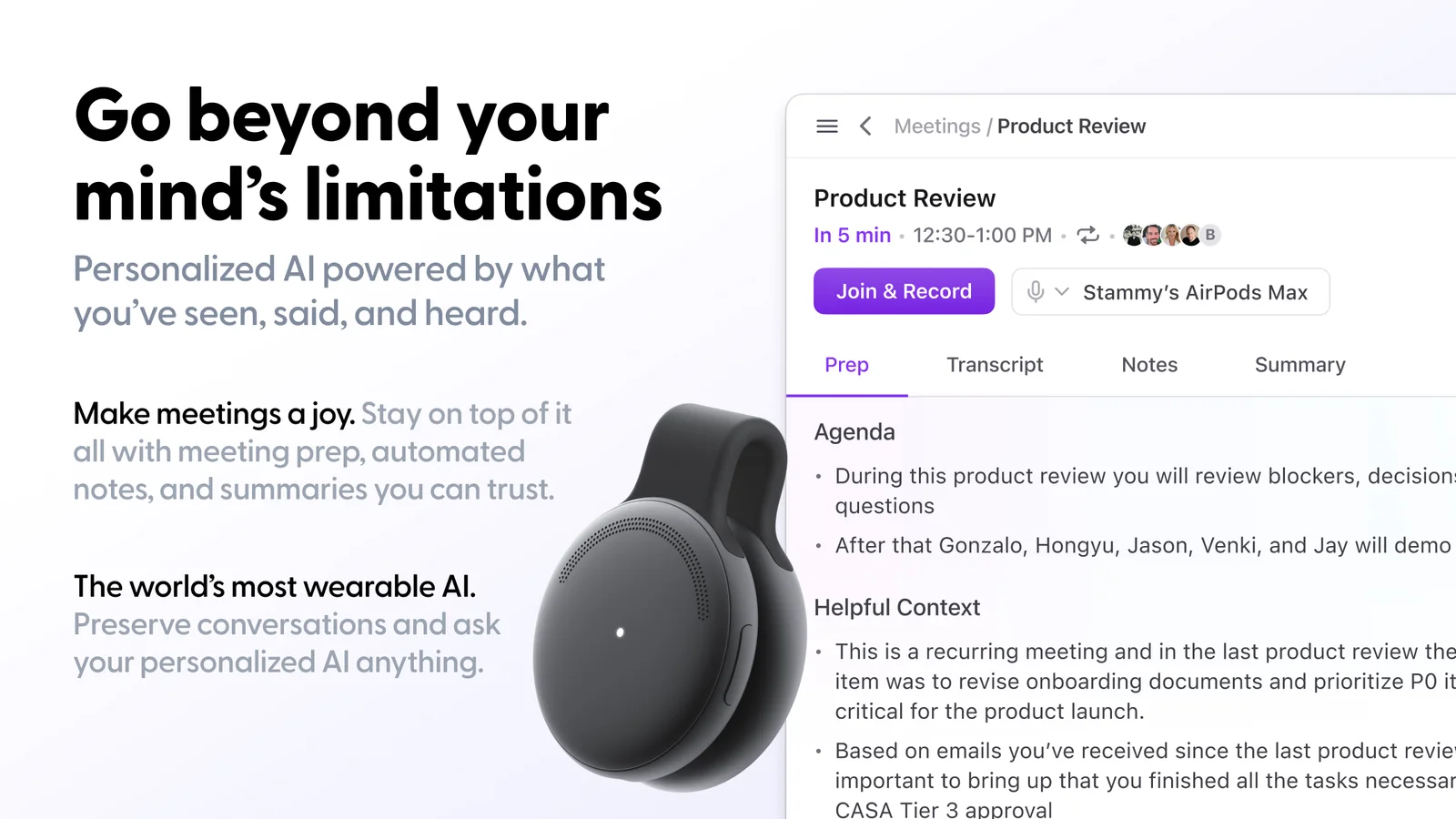
Limitless Pendant
The most thoughtful consent design in the category, anchored by the Limitless desktop ecosystem. Buy this if you want a pendant that integrates with your existing meeting workflow rather than functioning in isolation.
Read full review → - #2 · Best for focused capture
Plaud NotePin
Push-to-talk, single-purpose, paired to the strong Plaud transcription pipeline. Best if you want a wearable that records intentionally rather than continuously — fewer privacy edge cases, more predictable workflow.
Read full review → - #3 · Different category, listed honestly
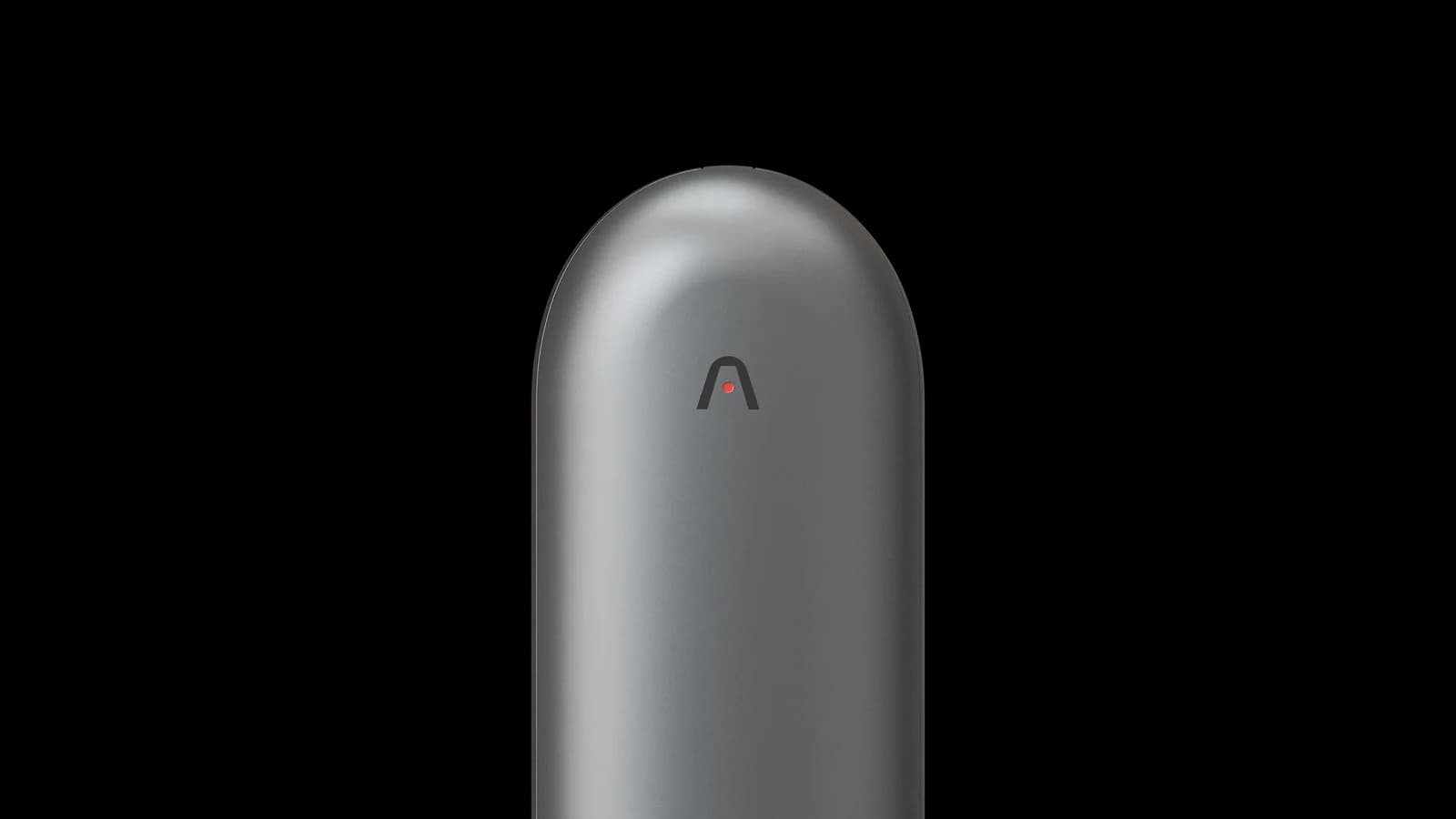
Friend
Not a productivity tool. Friend is positioned as an AI companion, not a meeting recorder, and the comparison is unfair to both products. Listed here because users searching for AI pendants will find it.
Read full review →

Always-on vs intentional capture: the defining choice
AI pendants split sharply along this axis. The Limitless Pendant and Friend default toward continuous or near-continuous capture, with consent prompts and ecosystem integrations softening the model. The Plaud NotePin defaults to push-to-talk, capturing only when you press the button. This is not a minor UX detail — it is the most consequential design decision in the category, with downstream effects on social friction, privacy posture, legal exposure (especially in two-party-consent jurisdictions), and battery life. Always-on pendants integrate more seamlessly with your life and produce richer memory data; intentional-capture pendants are easier to defend in any setting where someone might object. For most users, the right answer is intentional capture for the first few months while you build social and legal comfort, then optionally graduate to always-on if the use case demands it.
Two-party-consent jurisdictions: the constraint to know
In a number of US states (California, Florida, Pennsylvania, and others) and similar jurisdictions internationally, recording a conversation requires the consent of all parties — not just the recorder. AI pendants that capture audio in those jurisdictions without explicit other-party consent are not just rude; they may be illegal. The Limitless Pendant's consent-prompt design addresses this directly: the user is prompted to ask the other party for consent before sustained capture. The Plaud NotePin sidesteps the issue by being clearly user-initiated and easier to disclose. Friend's continuous-capture model is the hardest to align with two-party-consent law and is the largest source of legal risk for the category. Before buying any AI pendant, check the rules in your state or country and the states you visit.
What the captured data actually does for you
The value of an AI pendant is not the recording itself — it is what the AI does with it. The Limitless Pendant integrates captured audio into your existing Limitless dashboard, which already aggregates your meetings, calls, and desktop activity into a searchable conversational memory. The Plaud NotePin pushes audio into the same Plaud workflow as the Note: structured summaries, action items, decisions, and a searchable transcript delivered to your phone within minutes. Both are useful, in different ways. The Limitless approach is best if you want a single pane of glass for personal context across all sources. The Plaud approach is best if you want a focused tool that produces clean summaries you actually use. Friend, by contrast, does not produce summaries or transcripts — the value is the conversation with the AI persona, and the captured data is processed but not surfaced.
What to avoid
Three patterns to skip in 2026. First, any AI pendant from a company without a published privacy policy and data retention disclosure. The category has stabilized enough that responsible vendors document these clearly. Second, any always-on pendant marketed as discreet or invisible. The covert framing is a signal that the product has not thought through social friction or legal exposure, both of which will catch up with the user. Third, any AI pendant that requires a subscription above $20/month without delivering a complete ecosystem (desktop app, integrations, multi-context capture). Standalone pendants at high subscription tiers are not yet a sustainable product category — the value rarely justifies the recurring cost.
Frequently asked questions
- Are AI pendants legal to use?
- In one-party-consent jurisdictions (most US states, much of the world), yes, with the user's own consent. In two-party-consent jurisdictions, recording a conversation requires all participants to consent. AI pendants do not change the underlying law. Check your local rules.
- Do AI pendants have batteries that last all day?
- Push-to-talk pendants (Plaud NotePin) last 20+ hours of capture. Always-on pendants (Limitless) last a full workday of continuous use. Friend is rated around 15 hours but real-world numbers vary as the product is preorder.
- How do AI pendants compare to phone recording apps?
- Pendants free you from holding your phone, which matters in walking conversations, in-person interviews, and hands-busy contexts. They also signal intent to capture in a way a phone in your pocket does not, which is a feature for social transparency. For desk-based meetings, phone or desktop recording remains lower-friction and often better quality.
- Can AI pendants distinguish speakers?
- Limitless and Plaud both perform speaker diarization in the cloud, with usable but imperfect accuracy. Expect occasional speaker label confusion in multi-person settings.
- Where is the captured audio stored?
- Limitless and Plaud both process audio in their respective cloud pipelines; both publish retention and deletion policies. Friend processes in its cloud and is the least transparent about retention specifics. None of the three offer fully on-device transcription today, though both Plaud and Limitless have hinted at it.
- Is there an AI pendant that does not need cloud processing?
- Not yet at consumer-grade transcription quality. On-device LLM inference is improving but the audio-to-text-to-summary pipeline still benefits substantially from cloud models. Watch this question in 2027.