
Learn · May 16, 2026
What is an AI pin?
An AI pin is a wearable AI assistant designed to live on your clothing rather than your wrist or your nose. The pitch — voice-first AI without pulling out your phone — is older than the category by years, but the term 'AI pin' specifically refers to the wave of devices that shipped in 2024-2025 following the Humane AI Pin's high-profile launch. This page explains what the category actually is, the things it consistently struggles with, and how to think about buying one in 2026.
How the form factor works
An AI pin is a small disc, badge, or pendant attached to clothing via a magnetic clip, lapel pin, or lanyard. It typically contains a microphone array, a small speaker, a battery, sometimes a camera, sometimes a projected or paired display, and a low-power chip for wake-word detection and basic audio capture. The device pairs to a phone over Bluetooth or has its own cellular connection. Voice queries route through the phone or directly through the pin's cellular link to an AI service in the cloud, which responds with audio, text on a paired phone, or — in the case of Humane's projected display — a tiny laser image on your palm.
What AI pins do well
Three things, when they work. First, hands-free voice interaction — you don't need to hold or touch a phone to ask a question or capture a thought. Second, contextual capture — the pin can record a conversation, transcribe it, and surface a summary you can search later. Third, ambient queries — the AI is always-on (in the sense of always-listenable, not always-recording), so you can ask 'what is this song' or 'who is this building' without app overhead. These are real benefits and they are why the category exists.
What AI pins struggle with
The category has consistent failure modes worth knowing before buying. First, battery — pins are small, batteries are small, and the AI features that drain them most (continuous listening, vision processing) are the ones that justify the device. Most ship with under a workday of heavy use. Second, social and legal friction — always-on or near-always-on listening generates real questions about consent in shared spaces and runs into two-party-consent recording laws in several US states and other jurisdictions. The best-designed pins (Limitless's consent-prompt model, Plaud's push-to-talk) address this directly; the worst-designed ones hand-wave it. Third, the projected-display experiment failed — the Humane Pin's laser display struggled in bright light, consumed battery aggressively, and is not used by any successor product. Fourth, the cloud-dependency risk — when an AI pin's cloud service shuts down (as the Humane Pin's did in early 2025), the device bricks entirely.
Pins vs other wearable AI categories
AI pins overlap with three adjacent categories: smart glasses (AI on your face, sometimes with a display and camera), smart rings (AI biometrics on your finger), and dedicated AI recorders (capture devices like the Plaud Note that aren't necessarily worn). Pins are distinguished by the chest/lapel location, the voice-first interaction model, and the typical absence of a screen on the device itself. If you care primarily about visual AI — scene description, OCR, real-time translation — smart glasses are usually the better category. If you care primarily about biometrics, rings are better. If you care primarily about meeting capture at a desk, a phone-back recorder like the Plaud Note is better. The pin is the right pick for hands-free voice interaction with an emphasis on capture and ambient queries while moving.
How to buy an AI pin in 2026
Three filters. First, ignore launch MSRP — the 2024-2025 launches were priced for hype and most are cheaper now or available used. Second, prefer products with active update cadence over products with strong launch marketing — the Humane Pin's failure mode was the company stopped shipping fixes while the marketing stayed glossy. Third, decide your consent posture before buying — if you live in California, Florida, Pennsylvania, or another two-party-consent jurisdiction (or work in a regulated industry), you need a pin with explicit consent design, not a covertly-recording one. Our current top picks in this category are the Plaud NotePin (push-to-talk, strong transcription) and the Bee Pioneer (developer API, privacy-first posture).
Examples in the catalog
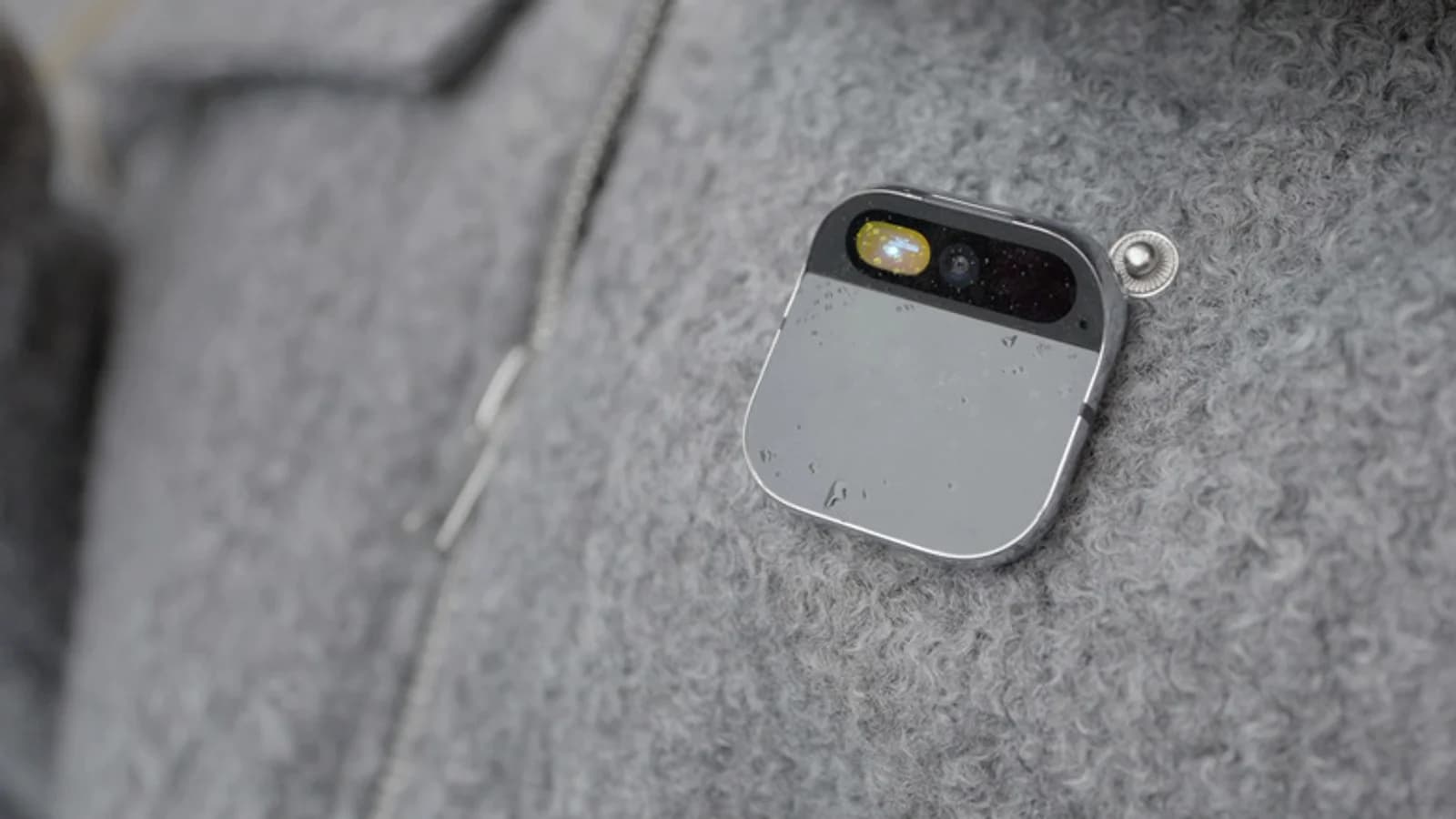
Humane
Humane AI Pin
The clip-on, screen-free AI pin from ex-Apple founders. Discontinued in early 2025 after a recall and weak adoption.
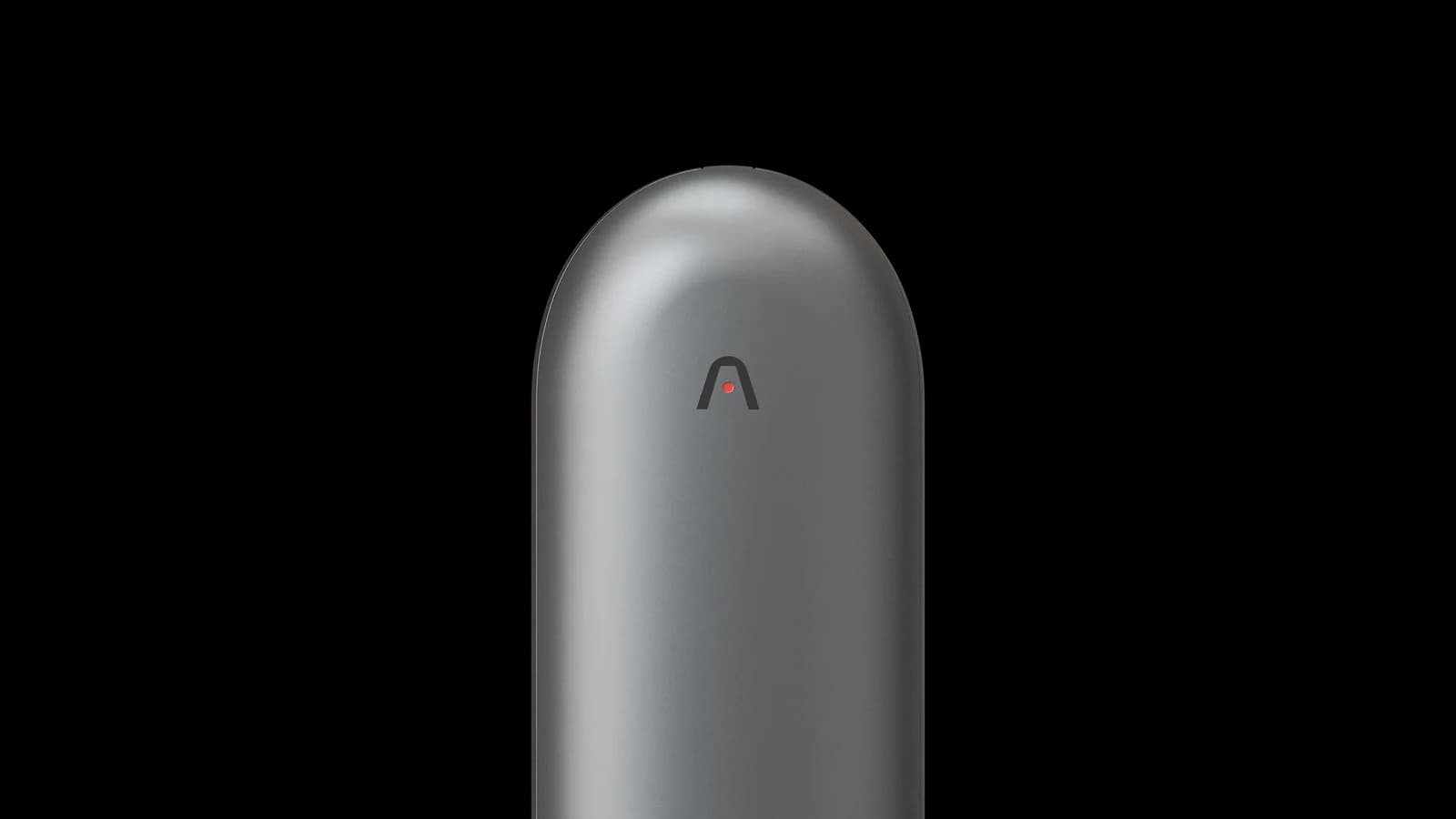
Plaud
Plaud NotePin
A wearable version of the Note — pendant, wristband, or clip — with the same AI summarisation pipeline.
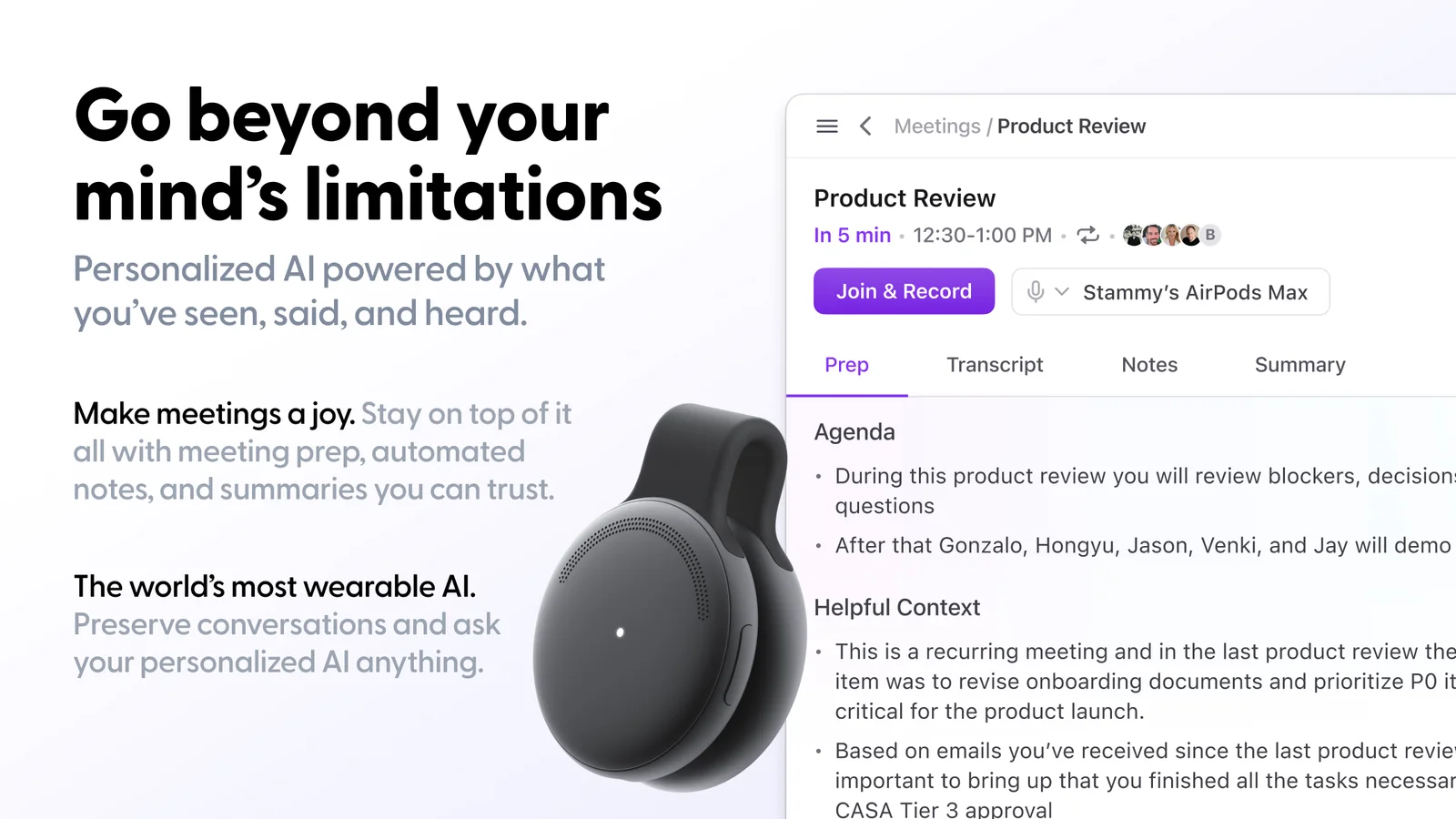
Limitless
Limitless Pendant
A wearable pendant tied to the Limitless app — captures meetings and personal context with on-device consent prompts.
Bee
Bee Pioneer
A cheap wristband that listens, builds a queryable memory of your day, and surfaces follow-ups.

Friend
Friend
A pendant pitched as an always-on AI companion that texts you reactions to your life. Polarising launch.
FAQ
- Are AI pins the same as AI pendants?
- Mostly yes — the terms are used interchangeably in the category. 'Pin' originated with the Humane AI Pin's lapel-mounted form; 'pendant' originated with the Limitless Pendant's lanyard form. The underlying device class is the same.
- Do AI pins work without a phone?
- Most require a paired phone for AI processing. The Humane Pin attempted to be standalone with cellular connectivity, and the experience was widely considered the device's largest failure mode. Phone-paired pins (Plaud, Limitless, Bee) are the dominant pattern.
- Are AI pins legal to wear in public?
- In most jurisdictions, yes, with caveats. Recording other people without consent runs into two-party-consent recording laws in several US states. Pins with explicit consent design (Limitless before discontinuation, Plaud push-to-talk) are easier to defend.
- How long do AI pin batteries last?
- Highly variable. Push-to-talk pins (Plaud NotePin) last 20+ hours of capture. Always-on pins (Bee) last a full workday under moderate use. Heavy use with vision processing or projected display drops these meaningfully.
- Is it worth buying an AI pin in 2026 vs waiting?
- If you have a specific use case (meeting capture, hands-free queries while walking), buy now — the products in this guide are mature enough to deliver. If you're buying speculatively because 'AI pins are the future,' wait — the category is still settling and the io Device (rumored Jony Ive + Sam Altman product) will reshape the high end when it ships.