
Learn · May 16, 2026
What is an AI recorder?
An AI recorder is a dedicated device for capturing conversations — meetings, interviews, calls, lectures — and turning them into searchable text with structured summaries. The category overlaps with AI pendants but is distinct: AI recorders are about capture as the primary use case, not companionship, biometrics, or visual AI. Plaud is the dominant brand, the Limitless Pendant was a credible alternative until its acquisition, and a wave of new entrants are still competing for the second-place slot. This page explains what the category delivers and why it is the most useful AI hardware purchase you can make in 2026.
What an AI recorder actually does
End a 45-minute meeting and within three minutes your phone shows a structured summary with action items, decisions, key quotes, and a fully searchable transcript. The summary is good enough to forward to colleagues without editing. That workflow — from end-of-meeting to shareable summary in under five minutes — is the entire pitch and the reason the category exists. The underlying stack is OpenAI Whisper-class transcription followed by GPT-4-class summarization, running in the vendor's cloud. The hardware varies: Plaud Note is a magnetic device that sticks to the back of your iPhone, Plaud NotePin is a wearable pendant, the Limitless Pendant (now discontinued) was a wearable disc.
Why this workflow works now
Two years ago, transcribing a meeting required either an expensive enterprise tool (Otter, Fireflies, Read.ai) or significant manual cleanup of a raw automatic transcript. Today, the combination of Whisper and GPT-4-class summarization produces meeting notes that, in many cases, beat what a human note-taker would have written. The summary is structured rather than narrative — action items, decisions, quotes, full transcript — which makes it usable without editing. The cloud cost has dropped enough that vendors can sell a consumer device at $99-$169 with a $79/year subscription and run the workflow at scale. This is the category's defining inflection point and the reason it is suddenly mainstream.
Failure modes worth knowing
Three. First, background noise reduces accuracy by 10-30% — cafes, conferences, and vehicles all degrade transcription quality. Second, the summary layer inherits transcription errors — a wrong proper noun in the transcript can show up confidently in the summary. For high-stakes use (legal, medical, financial), always read the transcript, not just the summary, and verify against the audio. Third, two-party-consent recording laws apply. In California, Florida, Pennsylvania, and other US states (and similar jurisdictions internationally), recording a conversation requires the consent of all participants. AI recorders make compliance easy with explicit disclosure at the start of a meeting; they do not change the underlying law.
Recorders vs other AI hardware
AI recorders are narrower and more focused than other wearables in the category. They don't do vision (no glasses-style scene description). They don't do biometrics (no ring-style sleep tracking). They don't do companionship (no Friend-style ambient AI persona). They do one job, very well: capture and summarize spoken conversations. For users whose primary use case is meetings, interviews, calls, or lectures, this single-purpose focus is a feature. Multi-purpose wearables (Ray-Ban Meta with audio capture as a secondary feature, for example) deliver worse transcription than dedicated recorders.
How to buy an AI recorder in 2026
Plaud is the category leader and the safest 2026 purchase. The Plaud Note is the more common starting point — magnetic phone-back form, $159 hardware, free tier of 300 transcription minutes/month or $79/year Pro for unlimited. The NotePin is the wearable variant for users who want hands-free capture during walking or standing conversations. If you have specific privacy or developer requirements, Bee Pioneer is the more configurable alternative ($49 + $19/month, with an API for routing data into your own workflows). The Limitless Pendant was the third credible option until December 2025; Meta's acquisition has ended Pendant sales.
Examples in the catalog

Plaud
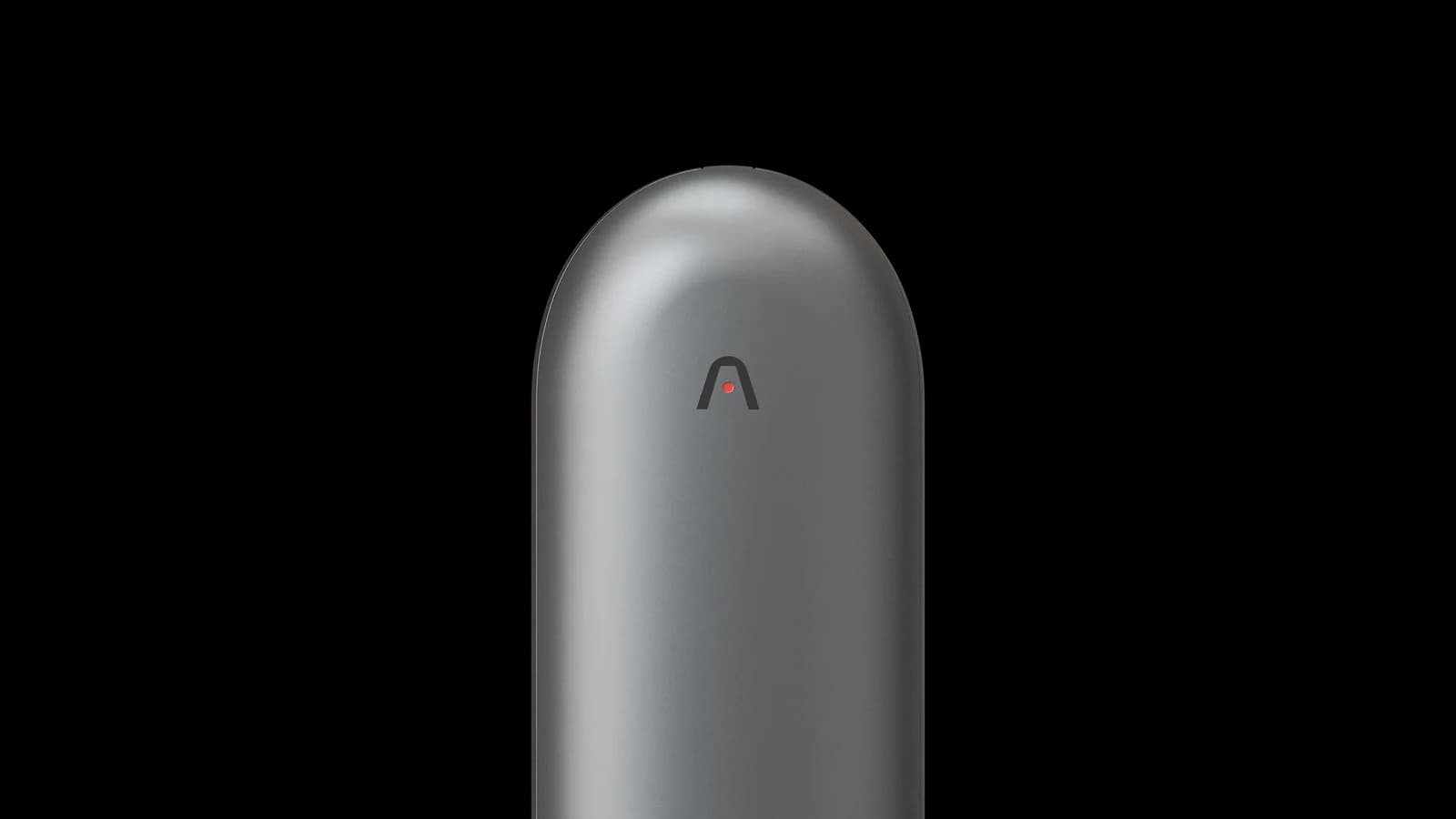
Plaud Note
A credit-card-thin recorder that magnetically attaches to your phone and turns conversations into AI summaries.
Plaud
Plaud NotePin
A wearable version of the Note — pendant, wristband, or clip — with the same AI summarisation pipeline.
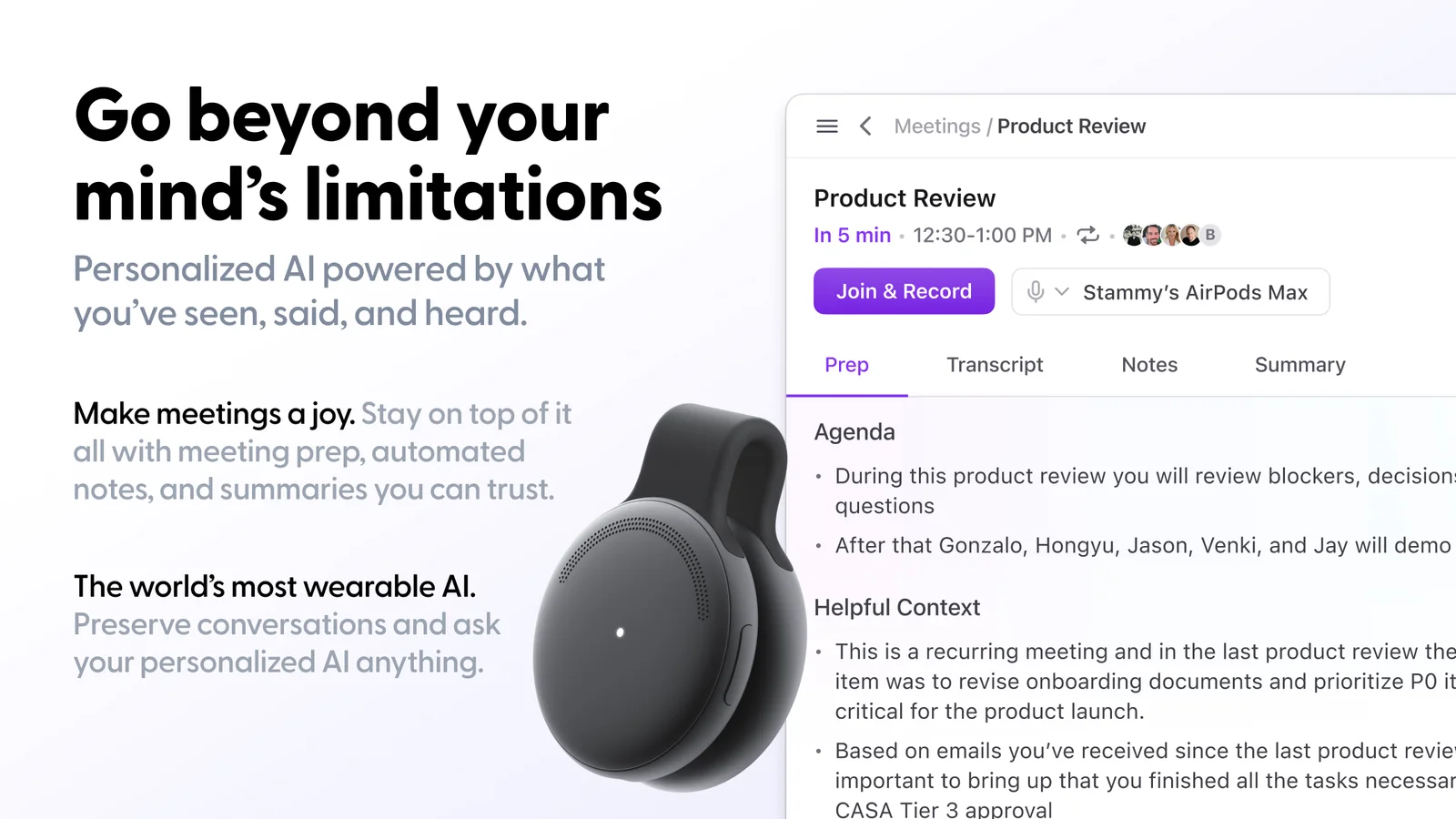
Limitless
Limitless Pendant
A wearable pendant tied to the Limitless app — captures meetings and personal context with on-device consent prompts.
Bee
Bee Pioneer
A cheap wristband that listens, builds a queryable memory of your day, and surfaces follow-ups.
FAQ
- Is on-device transcription available?
- Not yet at consumer-quality. All shipping products process audio in the vendor's cloud. Plaud and Bee have hinted at on-device transcription in future products; nothing has shipped.
- Can I use an AI recorder in a two-party-consent state?
- Yes, with the consent of all participants in the conversation. AI recorders are overtly user-initiated and easy to disclose; consent is typically obtained by stating at the start that the meeting is being recorded.
- How accurate are AI recorder transcripts?
- In clean audio, accuracy is high enough to be usable without manual cleanup for everyday meeting capture. In noisy environments, accents, or technical jargon, accuracy degrades by 10-30%.
- What's the difference between Plaud Note and Plaud NotePin?
- Note sticks to the back of an iPhone with a magnet (or USB-C for Android). NotePin is a wearable pendant or lapel device. They use the same transcription pipeline; choose by form factor preference.
- What about Otter, Fireflies, Read.ai, and other software-only tools?
- These are software competitors that integrate with Zoom, Google Meet, and Teams. Excellent for remote meetings; cannot capture in-person conversations the way a Plaud can. Many users run both.